

An engagement ring isn’t something you look at once. It becomes part of your everyday life, the way it catches light in a meeting, how it feels on your hand, and even how much care it needs over time. These details matter more than most buyers expect.
When comparing a radiant cut vs. an emerald cut diamond for an engagement ring, the decision goes beyond “sparkle vs elegance.” Both cuts behave differently in real-world lighting, not just under showroom spotlights.
Whether you’re choosing a solitaire, a halo, or a three-stone setting, the difference between radiant and emerald cuts directly affects how the ring looks and wears, especially if you prefer a rectangular diamond over a classic round shape.
Radiant vs Emerald Cut: What You’ll Actually Notice Before You Buy
Before getting into details, it helps to understand how these two diamonds feel in everyday use. Not just how they’re described on paper.

-
Overall Look at First Glance
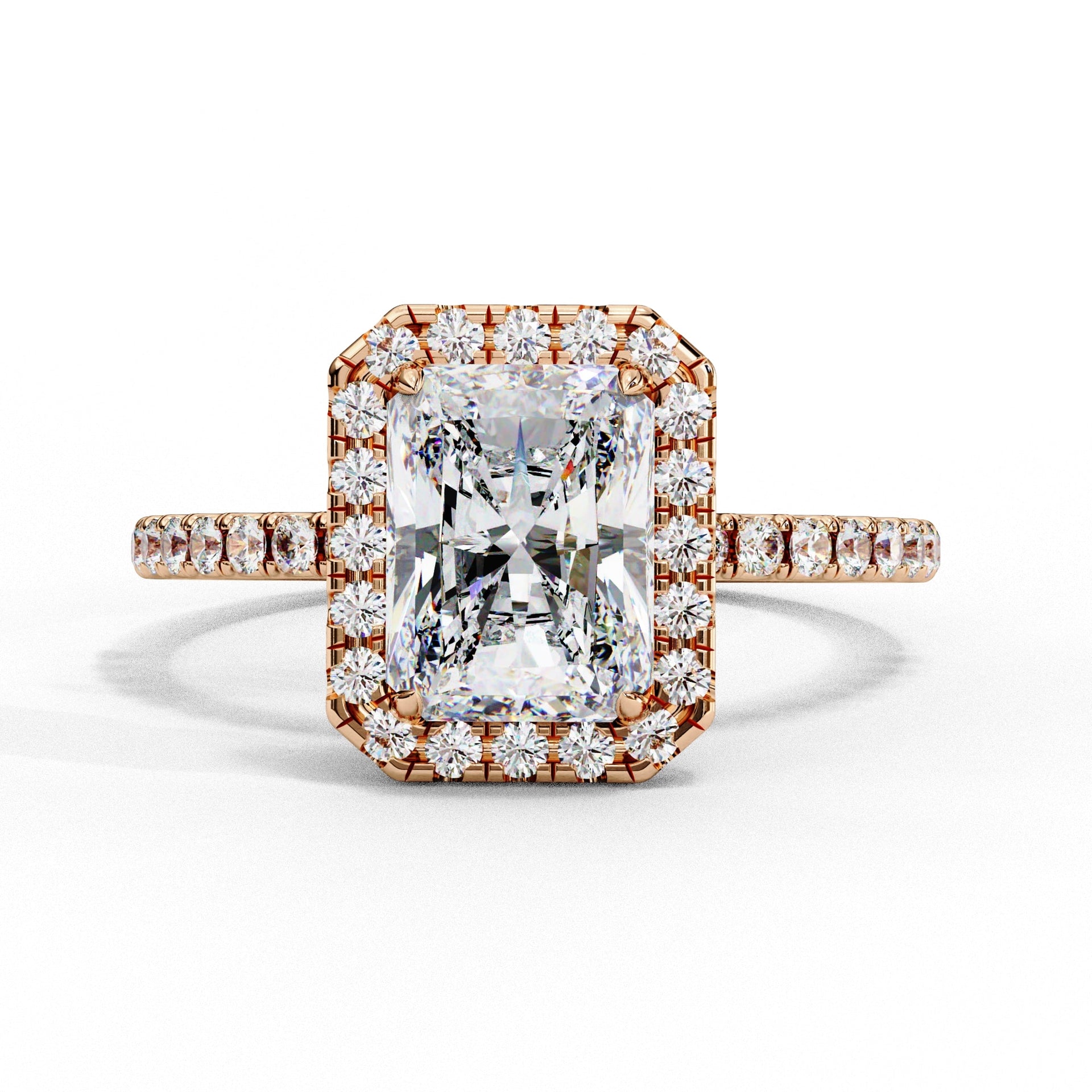
A radiant cut feels bright and energetic the moment you see it. It reflects light in multiple directions, so the diamond looks lively even in normal indoor settings.
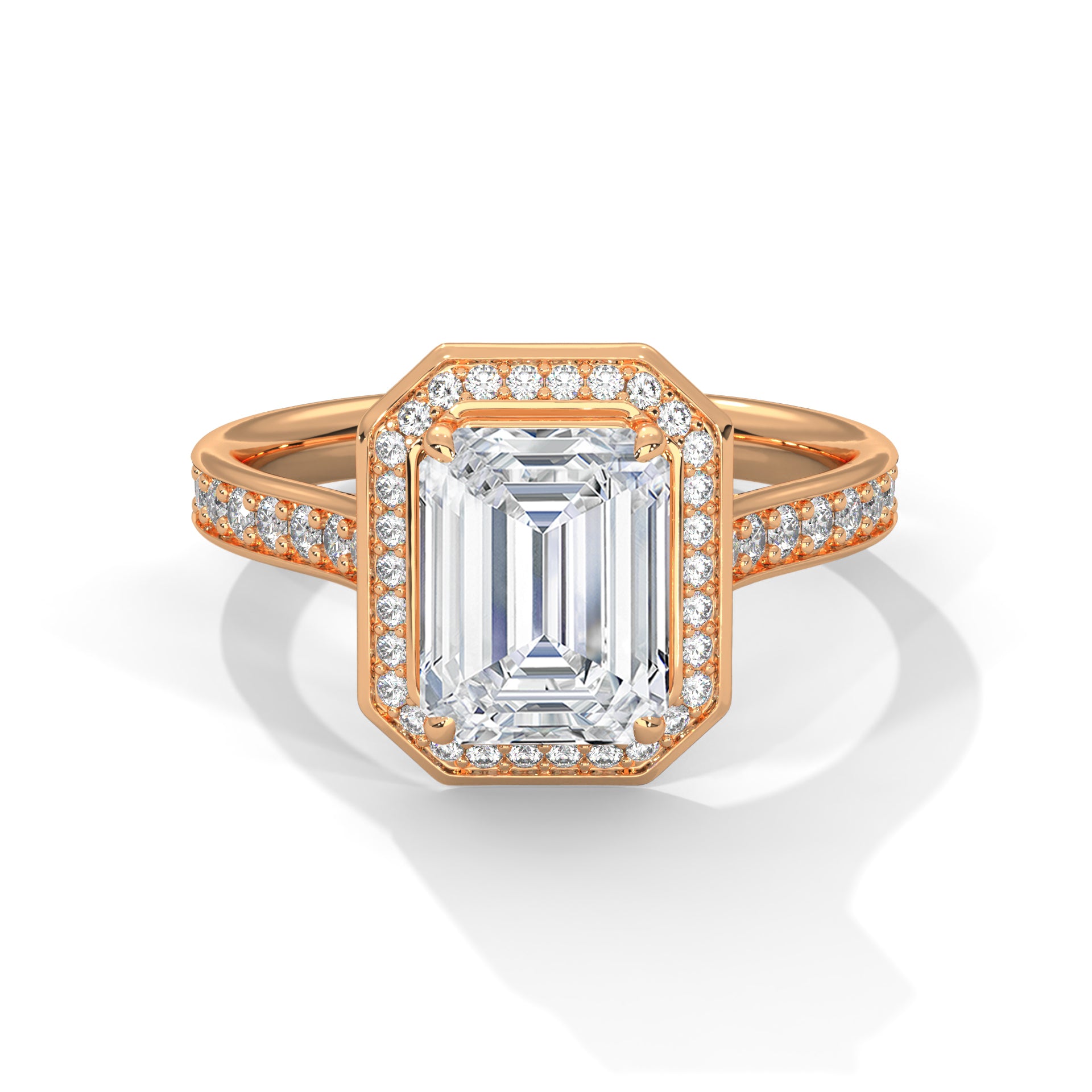
An emerald cut gives a completely different first impression. The diamond looks cleaner, more open, and structured. It's less about sparkle, more about presence.
-
How They Behave in Daily Wear
Radiant cuts tend to stay visually active throughout the day, whether you're indoors or outdoors. Emerald cuts are more selective because they look their best when the lighting hits at the right angle.
-
What Changes When You Start Comparing Options
The difference isn’t only visual. Radiant cuts are generally easier to choose because they hide minor imperfections well. Emerald cuts require more attention when buying, especially regarding clarity.
-
How They Sit on the Finger
Emerald cuts often appear slightly larger due to their open surface. Radiant cuts look more compact but draw attention through their brightness.
-
The Simple Way to Think About It
If you’re leaning toward sparkle and ease, radiant cut engagement rings are a straightforward choice. If your preference is clean lines and a more understated look, emerald cut diamonds move in that direction.
Radiant Cut Engagement Rings: Who They Actually Work For
Walk into most jewelry stores today, and you’ll notice one pattern: radiant cut diamonds are the ones catching your eye first. Why? Because they look bigger in 1-carat weight? No. The reflection light ability gets a focus instantly. There’s no waiting for the “right angle.” It just looks bright.
-
Consistent Sparkle in Everyday Lighting.
That’s the core appeal. A radiant cut doesn’t rely on perfect lighting conditions. Under office lights, in a restaurant, even in slightly dim environments, it keeps showing life.
If you’re someone who wants a diamond engagement ring to look active throughout the day, not just outdoors, this shape becomes a practical advantage.
-
More Flexibility When You’re Working With a Budget.
From a buying perspective, this cut also gives you more room to optimize your engagement ring budget. You don’t have to chase top-tier clarity grades to get a clean-looking diamond.
The faceting does a good job of masking minor inclusions, which means you can prioritize carat size (like 2-carat) or setting (halo or custom design) without immediately pushing your budget higher. For many buyers, this flexibility is the deciding factor.
How Radiant Diamond Rings Look on the Hand (Beyond Carat Size).
There’s also a subtle but important detail in how it sits visually. Radiant cuts don’t have the open, glassy surface you see in step cuts. Instead, they create texture through sparkle. So even if the stone is slightly smaller on paper, it often draws more attention when worn.
These Diamonds are Built for Daily Wear and Practical Use.
In terms of practicality, the radiant shape holds up well. The corners are trimmed, which reduces the risk of chipping compared to sharper-edged diamonds. If the ring is going to be worn daily and not just on occasions, then durability matters more than most buyers realize at first.
Radiant Cut Works Seamlessly With Modern Ring Designs.
Where it really comes together is in modern ring designs:
-
Hidden halos
-
Slim solitaires
-
Minimal three-stone settings
It tends to complement radiant cuts well because they don’t compete with the center stone’s brightness. The diamond already does enough visually; you’re just framing it.
When Radiant Cut Is the Right Choice
If your expectation from an engagement ring is simple, that look bright, feels modern, and stays visually strong without constant upkeep, radiant cut diamonds tend to meet that brief without much compromise.
Emerald Cut Engagement Rings: A Different Kind of Presence
An emerald cut doesn’t try to catch your attention in the same way a radiant cut does. There’s no scattered sparkle or constant shine. Instead, it reflects light in broad, controlled flashes. The look is calmer, almost mirror-like, which is why many buyers describe it as more “composed” than brilliant.
-
The Clean Look That Defines This Cut
What stands out immediately is the clarity of the surface. You get the right: we’re talking about the 4Cs of diamonds. With fewer, larger facets, the diamond appears more open.
This gives it a glass-like finish that feels structured and intentional. It’s related to visual noise, clean lines, and symmetry.
-
Why Clarity Matters More Here
That same openness comes with a trade-off. Emerald cut diamonds don’t hide imperfections easily. Even small inclusions can become visible, especially when viewed from the top.
This is why buyers need to move toward higher clarity grades (VVS1 and VVS2 than SI1 and SI2) compared to radiant cuts, which directly impacts budget decisions.
How It Looks When Worn Daily
On the other hand, an emerald cut creates a different kind of impact. It doesn’t flash constantly, but it holds attention through its shape and proportions.
Because of its large table (top surface), it often appears bigger than other diamonds of the same carat weight. Even the 1-carat emerald looks more efficient than the rectangular princess and oval. The effect is subtle but noticeable, especially in simpler settings.
Where Emerald Diamond Feels Most Natural in Ring Designs
Emerald cuts pair best with designs that don’t interrupt their structure.
-
Solitaires are the most common choice because they allow the diamond’s shape to stand on its own.
-
Three-stone rings are also popular, especially when paired with tapered side stones that enhance the overall symmetry.
-
Vintage rings are decorated with unique settings and yellow gold metal tone, and for that, emeralds become a prime choice.
What to Expect in Terms of Wear and Care
This emerald cut does require a bit more awareness in daily use.
-
The corners are more exposed compared to radiant cuts, so protective settings like double prongs or bezels are preferred.
-
It also shows dirt more easily, meaning occasional cleaning becomes part of maintaining its look.
When Emerald Cut Makes More Sense
If your preference leans toward a refined, understated engagement ring that doesn’t rely on sparkle to stand out, emerald cut diamonds offer a distinct appeal even in 1 to 3-carat weights. They suit buyers who value clarity, proportion, and a unique kind of luxury over immediate brilliance.
How Radiant and Emerald Cuts React to Real-World Lighting
However, when you purchase a 1-carat solitaire engagement ring or a 2-carat halo ring in yellow gold, you want to see how the radiant should look and how the emerald does.

What Changes After You Leave the Store
Jewelry stores are designed to make every diamond look impressive. Once you step into normal environments such as office lighting, indoor settings, and evening conditions, the difference between these two cuts becomes more obvious.
-
Radiant Cut in Indoor and Low Lighting
A radiant cut holds brightness even when the lighting isn’t ideal. Its faceting spreads light across the surface, so the diamond doesn’t rely on strong light sources to look lively. This is why many buyers prefer radiant cut engagement rings for daily wear. They don’t “switch off” visually.
-
Emerald Cut in Natural vs Artificial Light
Emerald cuts behave differently. In natural daylight, especially under direct light, they produce sharp, clean reflections that look refined. But in softer or diffused lighting, that same diamond can appear more subtle, even in a 5-carat diamond compared to a radiant diamond. It doesn’t lose beauty; it just doesn’t project it constantly.
Why This Matters for Daily Wear
This isn’t about which cut is better. It’s about expectation. If you want your diamond ring or any jewelry to look bright throughout the day without thinking about lighting, radiant cuts are more consistent. If you’re comfortable with a diamond that looks its best in certain moments rather than all the time, emerald cuts offer that experience.
A Practical Way to Decide
Think about where you’ll wear your ring most. Indoor routine, mixed lighting, and frequent use tend to favor radiant cuts. Outdoor settings, occasional wear, or a preference for a quieter look lean toward emerald cuts.
Which Diamond Looks Bigger? Radiant vs Emerald Cut Size Comparison
Radiant always has the upper hand in looking wider and bigger than Emerald. However, there are some aspects to consider.

Why 1.00 Carat Doesn’t Look the Same in Every Cut
In engagement rings, 1-carat diamonds are a common choice. But note that two diamonds can both be 1 carat and still look noticeably different once set in a ring. This is because carat measures weight, not how much of the diamond is visible from the top.
When you compare a radiant cut vs. an emerald cut diamond engagement ring, the spread (visible surface area) becomes more important than the number on the certificate.
-
Emerald Cut: More Visible Area for the Same Budget
A 1-carat emerald cut typically shows a larger face-up size than a radiant cut of the same weight. For example, a well-cut emerald diamond may measure around 7.0 x 5.0 mm, giving it a broader, more open appearance.
This becomes even more noticeable in a solitaire engagement ring, where nothing distracts from the center stone. If your goal is to buy an engagement ring that looks bigger without moving up to 1.20 or 1.50 carat, emerald-cut diamonds are the smarter pick.
-
Radiant Cut: Slightly Smaller Spread, More Visual Energy
A 1-carat radiant cut may measure closer to 6.5 x 5.0 mm, depending on proportions. On paper, that difference seems minor, but on the finger, it can feel more compact.
However, once placed in a hidden halo or halo engagement ring, the radiant cut gains presence quickly. The added brilliance, combined with surrounding stones, can make a 0.90–1.00 carat radiant look more eye-catching than a larger emerald cut.
What Happens as You Move Up in Carat
At higher weights, the difference becomes clearer.
-
A 1.50-carat emerald cut may look noticeably elongated and cover more finger width.
-
A 1.50 carat radiant cut will appear denser but brighter.
In three-stone engagement rings, emerald cuts create a more balanced, spread-out look, while radiant cuts keep the focus tightly on the center.
How Setting Style Changes Size Perception
The ring design can shift how size is perceived:
-
Solitaire rings (1.00–2.00 carat): Emerald cuts look larger and more prominent.
-
Halo settings (0.80–1.50 carat): Radiant cuts appear bigger due to added sparkle.
-
Bezel settings: Emerald cuts maintain their shape clearly, while radiant cuts look more compact
What Should You Prioritize While Buying
If you’re trying to maximize visible size within a fixed budget, say choosing between a 1.00 carat vs a 1.20 carat look without paying for the upgrade, emerald cut engagement rings give you that advantage.
If your priority is presence rather than spread, especially in modern designs like hidden halo or pavé bands, a radiant cut diamond engagement ring feels more striking, even at slightly lower carat weights.
Clarity and Inclusions: What You Can (and Can’t) Get Away With
Diamond clarity determines how clean your diamond looks once worn. It's not just a grading label.
-
Emerald Cut: Clean Look Comes at a Cost
Emerald cut diamonds are less forgiving when it comes to clarity. Their large, step-cut facets act like a window, making inclusions easier to spot, especially in the center. For a 1.00–1.50 carat emerald cut engagement ring, most buyers stay within VS1 to VVS2 clarity to maintain a clean, premium look.
-
Radiant Cut: More Flexible and Budget-Friendly
Radiant cuts handle inclusions much better. Their faceting breaks light into smaller reflections, which helps mask minor flaws. This means you can choose SI1 or VS2 clarity even in 1.00–2.00 carat radiant cut diamond engagement rings without noticeable imperfections.
What This Means When You Buy
If you’re choosing an emerald cut, clarity isn’t where you compromise. With radiant cuts, you have more freedom to balance clarity with size or setting, making them easier to fit within a practical budget.
Buy Your Radiant and Emerald Diamond Engagement Ring With Alyce Jewels
Choose with Confidence, Not Confusion
Finding the right engagement ring becomes simpler when you can compare real options side by side. At Alyce Jewels, the focus is on helping you choose between radiant and emerald cut diamonds based on how you’ll actually wear the ring.
Whether you’re looking for a 1.00 ct radiant cut with a hidden halo or a 1.50 ct emerald cut solitaire, each diamond is presented with clear details on cut, clarity, and pricing. This makes it easier to understand what you’re paying for and where you can optimise your budget.
Alyce Jewels engagement rings are available in:
-
IGI-certified lab-grown diamonds
-
Silver (925) and gold (10kt, 14kt, and 18kt) in yellow, white, and rose
The collections are designed to highlight each cut properly: radiant for brilliance and emerald for clean structure. So, your final choice feels right both visually and practically.
If you’re ready to buy a diamond engagement ring that fits your style and daily use, explore the latest designs at Engagement Rings for Women.
For a custom ring design, we also offer that kind of service to match your requirements.
FAQs
Which diamond is more durable for daily wear?
Radiant cut diamonds are more durable due to trimmed corners, while emerald cuts need protective settings to prevent chipping during daily use.
Which setting suits radiant and emerald cut engagement rings best?
Radiant cuts pair well with halo or hidden halo settings, while emerald cuts look best in solitaire or three-stone designs.
Which is more expensive: radiant or emerald cut diamonds?
Radiant cuts may cost slightly more per carat, but emerald cuts often require higher clarity, increasing the overall engagement ring price.
Which cut is better for an active lifestyle?
Radiant cut engagement rings suit active lifestyles better due to durability, consistent sparkle, and lower maintenance compared to emerald cuts.
What are the main pros and cons of radiant vs emerald cut?
Radiant offers sparkle and flexibility, while emerald provides elegance and size appearance, but requires higher clarity and careful selection.
How do I choose between radiant and emerald cut diamonds?
Choose radiant for brightness and ease; choose emerald for clean lines, larger appearance, and a refined, understated engagement ring look.