

A pair of 1 carat diamond earrings sits in that rare sweet spot where sparkle meets sense. Big enough to catch light across a room, small enough to wear to the office without a second thought: it's the single most-searched carat weight for stud earrings, and for good reason. If you've spent any time comparing listings, you've probably noticed the same three questions keep coming up: what does "1 carat" even mean on a pair of earrings, how much should you actually pay, and which shape is going to look best on you.
Here's the real answer to all three — plus a proper look at six specific 1 carat styles, so you know exactly which pair to add to your cart, not just which carat weight to search for next.
What "1 Carat" Actually Means on a Pair of Earrings
This trips up more shoppers than anything else on this list. When a listing says "1 carat diamond earrings," it's almost always referring to total carat weight (TCW) — the combined weight of both stones, not one. So a "1 carat" pair of round studs typically has two 0.50-carat diamonds, one in each ear, not a full carat on each side.
A single 0.50-carat round diamond measures roughly 5.2mm across, which reads as a solid, noticeable stud without tipping into "statement piece" territory. If the listing instead says "1 carat each" or "2 carat total weight," you're looking at a full carat per ear — a considerably bigger and pricier earring. Always check whether the number listed is per stone or per pair before you compare prices between two sites, because this single detail explains most of the price gap you'll see while browsing.
Shape changes the math too. A 0.50-carat round diamond and a 0.50-carat radiant or emerald of the same weight won't look the same size. The elongated cuts like marquise and pear prioritize appearing larger for their carat weight because more of the stone's surface area is visible face-up.
How Much Should You Pay for 1 Carat Diamond Earrings?
Price is where natural and lab-grown diamonds really part ways. A natural 1 carat total weight pair with decent color and clarity (roughly G-H color, VS clarity) typically runs somewhere between $1,000 and $2,500 at a mainstream jeweler, and can climb well past that for premium cut grades. Lab-grown diamonds of the same visual quality and total weight generally land 40-60% lower, often in the $400-$900 range, simply because growing a diamond in a controlled lab costs less than mining and sorting one.
A few things move the needle on price beyond carat weight alone:
-
Cut and clarity: A well-cut stone with fewer visible inclusions costs more but also throws more light, so it can look brighter at a smaller carat weight. Prioritize the 4Cs of diamonds before paying the price.
-
Setting style: A halo setting earrings the center stone with smaller pavé diamonds, which pushes up both price and visual size. A solitaire earring or bezel setting keeps costs down and lets the stone speak for itself.
-
Metal: 14K gold is the everyday standard. 18K gold and platinum cost more but hold up better to daily wear and tarnish resistance.
This is exactly where lab-grown earns its reputation as the smarter buy for this carat weight. Below are six real 1 carat styles, currently priced, so you can see how far that budget actually stretches.
Six 1 Carat Diamond Earrings Worth Actually Considering
Each of these is built around roughly 1 carat total weight in solid gold, and each suits a slightly different taste. So, read through and note which one you kept re-reading. That's usually the one to buy.
-
Round Diamond Flower Style Stud Earrings
Best for: anyone who wants a classic round stud with a little more personality than a plain solitaire.
This pair takes the round brilliant, which is still the brightest-performing shape per carat. The lab-grown diamond earrings set it inside a delicate floral cluster instead of a bare prong setting. You get the timeless look people search for by default, plus a bit of detail that catches the eye up close without reading as "fussy" from a distance. It's the safest first pick if you're buying your first serious pair of diamond studs.
-
Round and Marquise Gold Earrings
Best for: buyers who like the classic round look but want a design that feels a step more current.
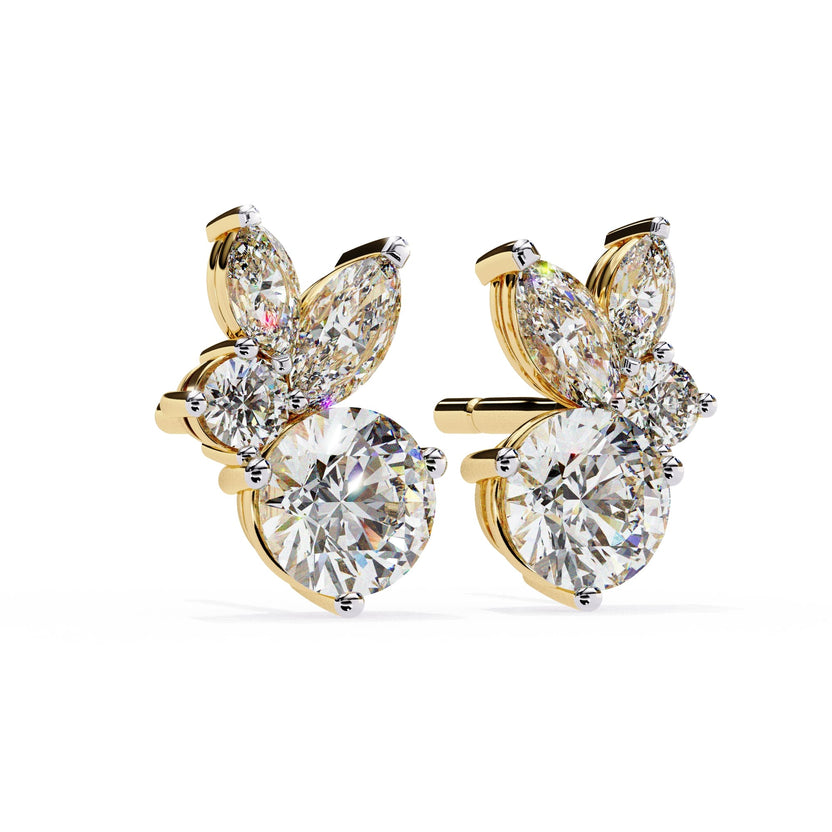
This 1.42-carat pair pairs round brilliants with marquise accents in the same 14kt yellow and white gold stud, so you get the brightness of round cuts with the elongated sparkle of marquise in one earring. It reads as more detailed than a plain stud in photos and in person, which makes it a strong pick if you want something that still photographs well for events. You can say this is a unique style of earrings women like to wear as a way to suits to overall personality.
-
Marquise Diamond Floral Stud Earrings
Best for: anyone who wants a 1-carat look at a lower price point, without sacrificing visual size.
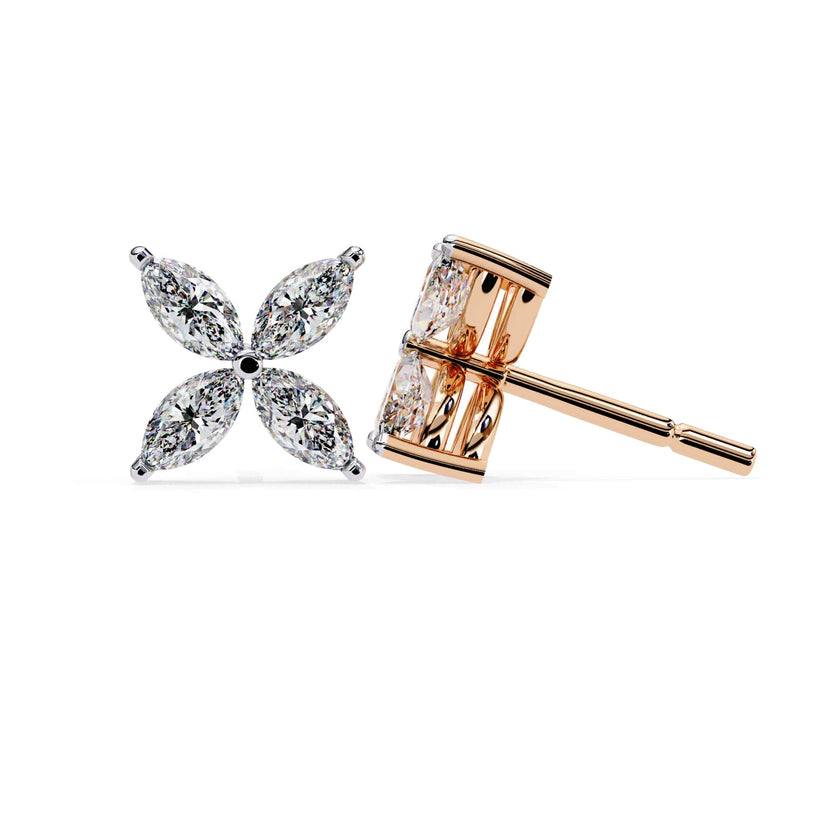
Marquise diamonds appear larger than their actual carat weight because of their elongated shape, and this floral setting takes advantage of that — the pointed tips are softened into a cluster, which makes the whole earring look fuller than its 0.88-carat total weight suggests. If your priority is maximum visible sparkle for the money within $500, this is the one to compare everything else against. The four-sided prongs and setting make the marquise cut 14kt gold earring a truly picked choice for a woman.
-
Round Diamond Halo Stud Earrings
Best for: shoppers who want a bigger-looking diamond without paying for one large stone.
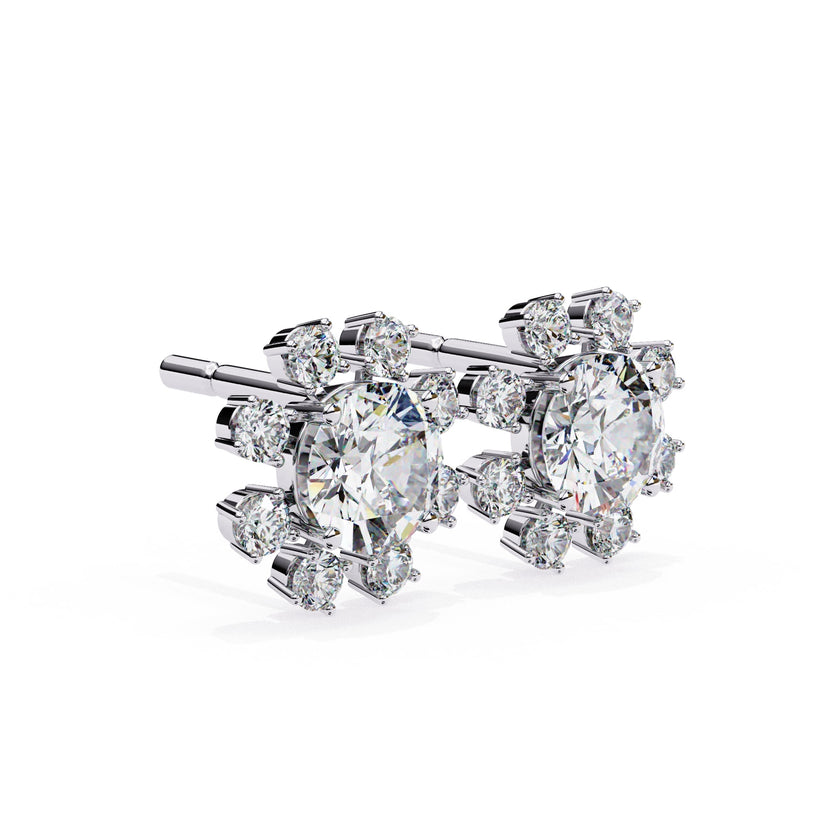
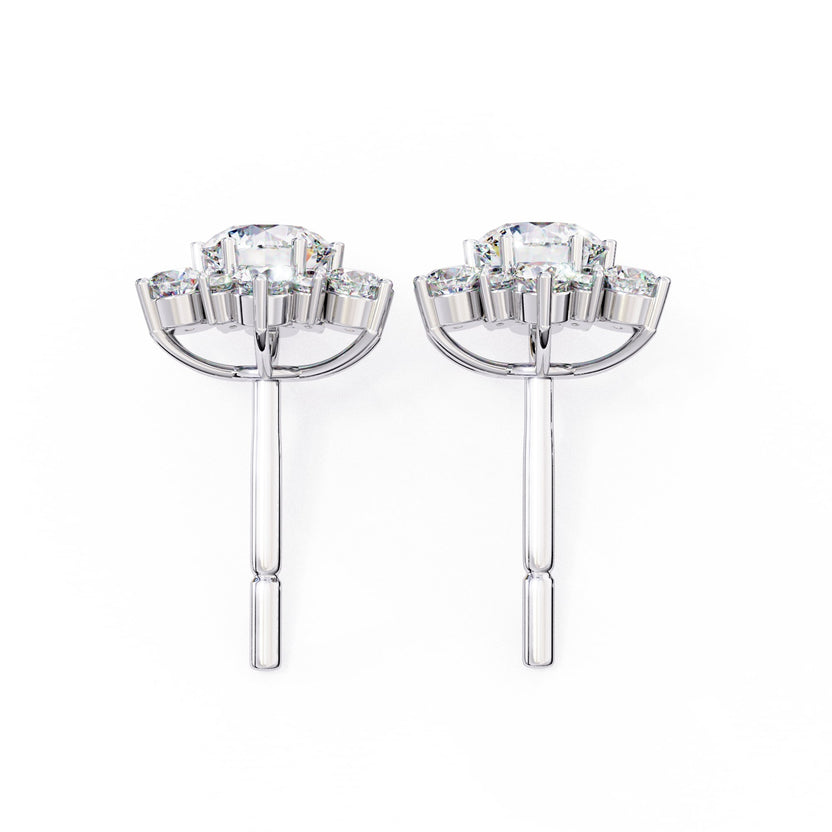
Instead of a single center diamond, this halo earring design arranges several smaller round diamonds into a flower shape. Because price rises disproportionately with the size of one large stone, several smaller diamonds of equal total weight cost meaningfully less, which is why this is the most affordable pair on this list while still delivering a full, textured look on the ear. You can choose rose gold, white gold, or yellow gold in the earring that matches the center and accent stones.
-
Multi Shape Lab Diamond Dangler Earrings
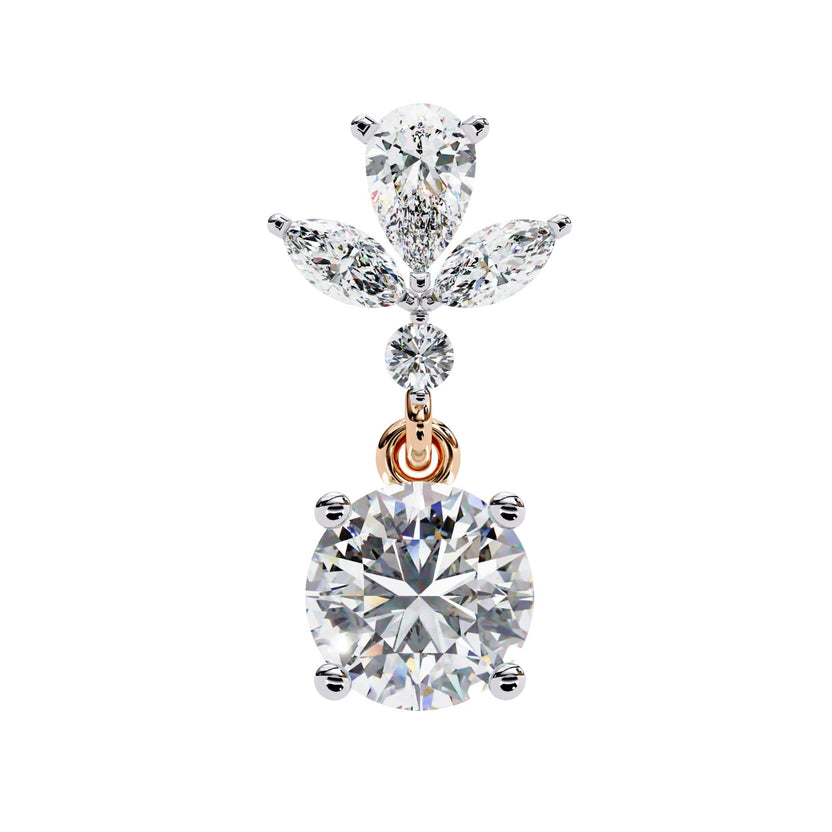
Best for: anyone who wants movement and a bit more presence than a fixed stud.
Mixed-shape designs combining round, marquise, and other cuts in one earring are one of the more current directions in diamond earrings right now, and this 1.17-carat dangler is a clean entry point into that look. It hangs just below the lobe, so it catches light with the smallest head turn, making it a strong choice for dinners, weddings, or any occasion where you want a stud to work harder without going full drop diamond and gold earring.
-
Round and Marquise Cut Diamond Drop Earrings
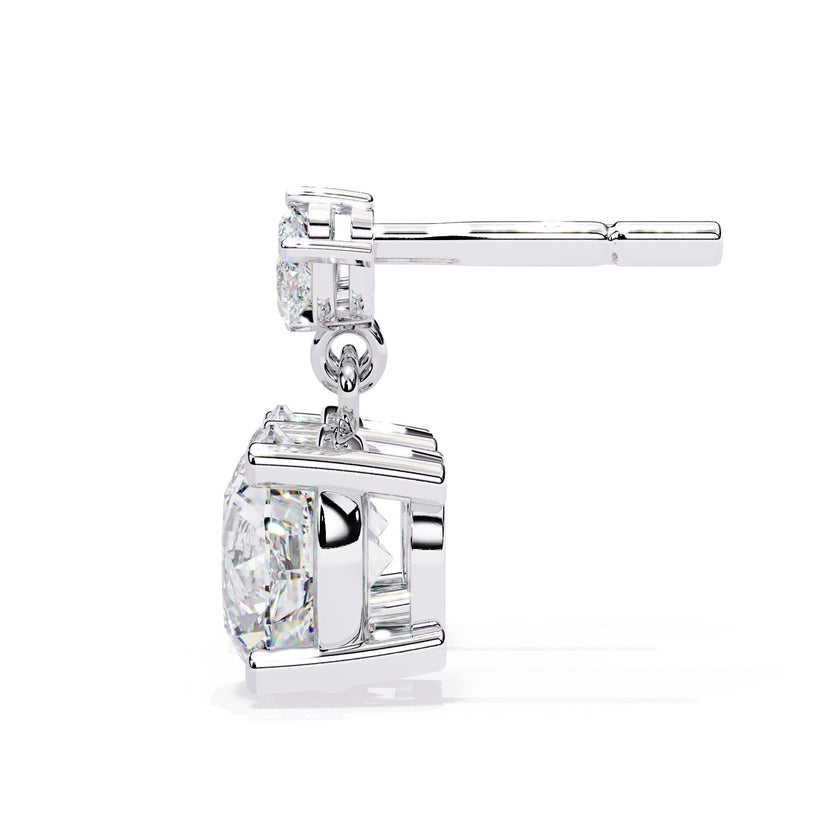
Best for: the one pair on this list built for evening wear and photos.
This is the most detailed design of the six, combining round and marquise stones into a true drop earring rather than a stud or dangler. If you're shopping for a wedding, an anniversary gift, or an event where you want the earrings to be part of the outfit rather than a background detail, this is the pair to go with. It’s the closest thing here to a genuine statement piece while still sitting around 1 carat total weight.
If none of these six feels like an exact match, Alyce Jewels offers a IGI-certified and original lab-grown diamond earrings collection has the rest of the range in the same 1-carat-friendly price bracket.
How to Style 1 Carat Diamond Earrings
-
Face shape matters less than people assume, but it's still worth a glance.
Rounder faces usually look sharper next to geometric shapes like the round-and-marquise or drop styles above, while angular or square faces often soften nicely next to a floral cluster like the Flower Stud or Round Diamond Flower Shape pair. If you're not sure, round is genuinely the safest choice — it flatters nearly every face shape and every hairstyle, up or down.
-
For everyday wear, prioritize the earring back over almost anything else.
Push-backs are fast and comfortable for daily use. Choose a screw-backs and secure locking backs are worth the extra step if you have an active schedule, travel often, or just don't want to think about losing an earring on a run. Heavier settings like the floral clusters put more weight on the earlobe than a plain solitaire, so if you have stretched or sensitive piercings, a lighter bezel or prong setting will feel more comfortable over a full day.
-
Occasion-wise, 1 carat studs are close to a "wear with anything" size.
They read as polished for the office, understated enough for daytime, and bright enough under evening light that you don't need to swap them out for dinner. The dangler and drop styles earn their place for weddings, formal events, or photos, without going all the way to a chandelier earring. A good rule for layering: if you're already wearing a statement necklace, let your earrings stay simple, and if your neckline is bare, the marquise-floral or drop style earns its place.
What Nobody Tells You Before You Buy Diamond Earrings Online
A few things actually change the buying experience, and they rarely make it:
-
Photos lie about scale
Product photography is almost always shot up close, which makes every stud look larger than it wears in real life. Before buying, look for a size comparison against a coin or a millimeter measurement rather than judging scale from the photo alone, and if a listing doesn't state the mm size, ask for it.
-
Post thickness matters if your piercing has stretched or healed unevenly
Standard posts run about 0.6–0.8mm; if a pair feels loose or shifts constantly, it's usually the post gauge, not the earring, and a screw-back or slightly thicker post solves it.
-
A grading document should exist even for lab-grown stones.
Reputable lab-grown diamonds are graded by IGI or GIA using the same 4Cs standard as natural diamonds, and a listing should either mention this or make it available on request. If nobody can tell you the color and clarity grade behind the price tag, that's worth asking about before you buy, not after.
-
Return and resize windows matter more than the marketing copy.
Earrings are a gift purchase as often as they're a personal one, so a workable return window and the ability to size up later is genuinely more useful long-term than a flashier setting.
Lab-Grown vs. Natural: Which Should You Choose?
It’s worth considering that choosing a lab-grown diamond solves the budget problem and offers the same quality as natural diamonds. The difference is only the origin.
For everyday studs especially, where the earrings are handled and worn constantly, most buyers find the savings make more sense than paying a premium purely for mined origin. It's also why each of the six pairs above can sit comfortably under $850 while still hitting close to a full carat total weight — a natural equivalent at the same visual quality would typically cost noticeably more.
Which 1 Carat Style Actually Fits You?
If you've read this far, you already have a sense of which one you liked. Here's the quick version, matched to what you're actually shopping for:
-
Want the safest, most classic choice? Flower Lab Created Round Diamond Stud Earrings
-
Want round brilliance with a modern twist? Round and Marquise Diamond Stud Earrings
-
Want the biggest visual sparkle for the lowest price? Marquise Diamond Floral Stud Earrings
-
Shopping on the tightest budget? Round Diamond Flower Shape Stud Earrings, $431
-
Want movement and a bit more presence? Multi Shape Lab Diamond Dangler Earrings
-
Buying for a wedding, event, or gift that needs to make a statement? Round and Marquise Cut Diamond Drop Earrings
Whichever one you pick, you're buying at close to a full carat total weight in solid 14K or 18K gold, for less than a smaller natural diamond would cost elsewhere. That’s really the whole case for lab-grown at this size. You can also buy a blue topaz earrings with a diamonds for a premium and sparkling look.
FAQs
-
Are 1 carat diamond earrings too big for everyday wear?
No. A 0.50-carat stud per ear (1 carat total weight) is one of the most commonly worn sizes for daily use, which is noticeable without being a "special occasion only" piece.
-
Will a jeweler be able to tell my earrings are lab-grown just by looking?
Not with the naked eye. Lab-grown and natural diamonds require specialized equipment to distinguish, which is exactly why a grading report matters more than a visual inspection.
-
What's the best earring back for larger or heavier studs?
Screw-backs or locking backs are worth it for anything above 0.50 carats per ear, since they distribute weight more evenly and are far less likely to loosen during the day.
-
Do diamond earrings hold their value over time?
Diamond jewelry generally isn't purchased as an investment. Resale value for both natural and lab-grown stones tends to run well below the original purchase price, so buy for how much you'll wear them, not for resale.
-
Can I upgrade the carat weight later, or should I just buy bigger now?
Some retailers offer trade-up or resizing programs; if that flexibility matters to you, confirm it before purchase rather than assuming it's standard.
-
Is a floral or cluster setting a good alternative to a solitaire diamond of the same size?
Yes. Clusters use several smaller stones to reach the same total carat weight as one larger diamond, usually at a lower price per carat, which is a smart way to get more visible sparkle for less.