

A 2 carat diamond ring costs anywhere from $1,800 to $50,000+, and the gap has almost nothing to do with size. It’s not just about a 5-carat diamond price that reaches $100K+ (applies to natural diamonds). That comes down to whether the stone is lab-grown or natural, and how it scores on cut, color, and clarity. If you've been staring at different price tags for what looks like "the same ring," you're not losing your mind. You’re just seeing the market's biggest pricing swing up close.
This guide explains what actually drives the cost of a 2-carat diamond ring in 2026, which settings make the stone look bigger (or smaller) than it is, and which metal tone suits a 2-carat stone. Also, know where to buy one without overpaying or getting stuck with a return policy that influences you to change your mind.
How Much Does a 2 Carat Diamond Ring Cost?
Here's the short version, then the detail.
|
Diamond Type |
Round, Good Color/Clarity |
Complete Ring (stone + setting) |
|
Natural diamond |
$13,000 – $30,000+ |
$15,000 – $35,000+ |
|
Lab-grown diamond |
$1,800 – $4,500 |
$2,500 – $6,000 |
Natural 2-carat diamonds jump in price more than a 1-carat stone of the same quality. Here, you're not paying double. You’re often paying 3–4x more, because larger rough diamonds are rarer and the cutter has to sacrifice more material to get a clean 2-carat finished stone.
Lab-grown diamonds don't carry that scarcity premium, which is why the same specs cost a fraction as much and why more buyers are choosing them at the 2-carat mark specifically. Since that's where the natural-vs-lab price gap becomes hardest to ignore.
Also, the country you prefer for buying a 2-carat ring decides the price. For example, a 2-carat diamond price in Dubai remains between AED 4,000 and AED 80,000. In the USA, the price starts from $1,800 to $30,000 (including both natural and lab-grown diamonds).
A few things move the number up or down within each category:
-
Shape: Diamond shape affects the ring price. For example, a 2-carat princess or emerald cut typically runs 20-30% less than an equivalent round. Round cuts waste more rough material during cutting.
-
Color and clarity: Diamond clarity and color also play an important role. Dropping from a D color to an H, or a VVS clarity to a VS, can shave thousands off the price with almost no visible difference to the naked eye.
-
Certification: Certified diamonds are a prime choice for buyers. GIA and IGI-certified stones cost a bit more than uncertified ones, and it's worth every dollar, since certification is what protects the resale and insurance value of the ring.
If you want a large, bright, well-cut stone without a five-figure price tag, this is exactly why the Alyce Jewels lab-grown diamond engagement ring collection exists. It lets you get an H+ color, VS clarity 2-carat center stone at a price that doesn't require a second mortgage.
The carat weight also plays a role in deciding ring pricing. A 1-carat diamond ring price is somewhere between $800 and $2,000, and the minimum is $2,000 for a 2-carat diamond ring.
What Actually Drives That Price (Beyond the 4Cs)
Everyone talks about cut, color, clarity, and carat. Fewer people talk about the two things that swing price just as hard:
-
Cut quality is doing more work than people think.
A well-cut 1.9 carat diamond can look bigger and brighter than a poorly-cut 2.1 carat stone. If a jeweler is pushing you toward hitting exactly "2.00 carats" on the label, ask what you're giving up on cut to get there. A slightly-under-2-carat stone with an excellent cut grade almost always outperforms a "full 2 carats" that was cut shallow or deep just to preserve weight.
-
Fluorescence gets ignored and shouldn't be.
Strong blue fluorescence can make an H, or I color diamond look whiter face-up, which means you can sometimes buy a lower color grade for less and get a stone that reads whiter in daylight than its paper grade suggests. Not every jeweler will tell you this, because it complicates the sales pitch.
Best Settings for a 2 Carat Diamond Ring
At 2 carats, the stone is the star and the setting's job is to support it, protect it day-to-day, and either amplify or downplay its size depending on what you want. Here are different types of ring settings we are mentioning:
-
Solitaire
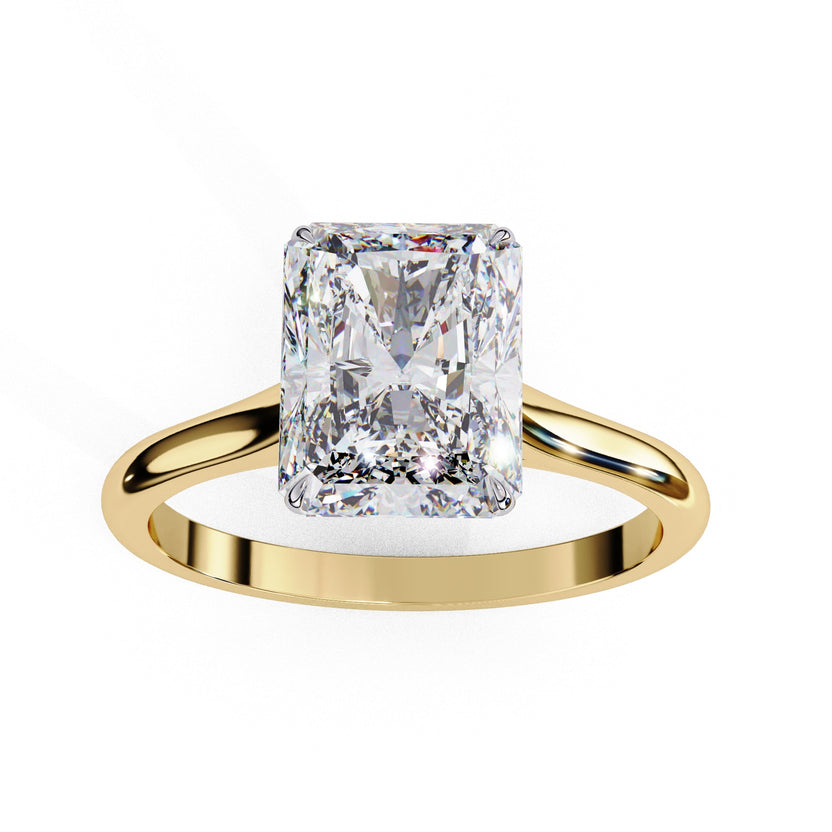
In a solitaire ring, usually four or six prongs exist with minimal metal. This is the setting that shows off a 2-carat stone’s actual size most honestly on the finger. If the diamond has excellent cut and FL or VVS clarity, a solitaire diamond ring lets it do all the talking. Choosing the solitaire ring is a kind of sensible expression towards the receiver.
-
Hidden halo

Apart from the solitaire ring, another ring setting is common: hidden halo. In this ring setting, smaller diamonds are tucked underneath the center stone, which can be invisible from the top view but adds more sparkle. The accent stones also bring a subtle size boost from the side profile. A hidden halo ring in 2-carat diamonds shapes a famous choice with buyers who want extra brilliance without a visibly “bigger” halo look.
-
Classic halo
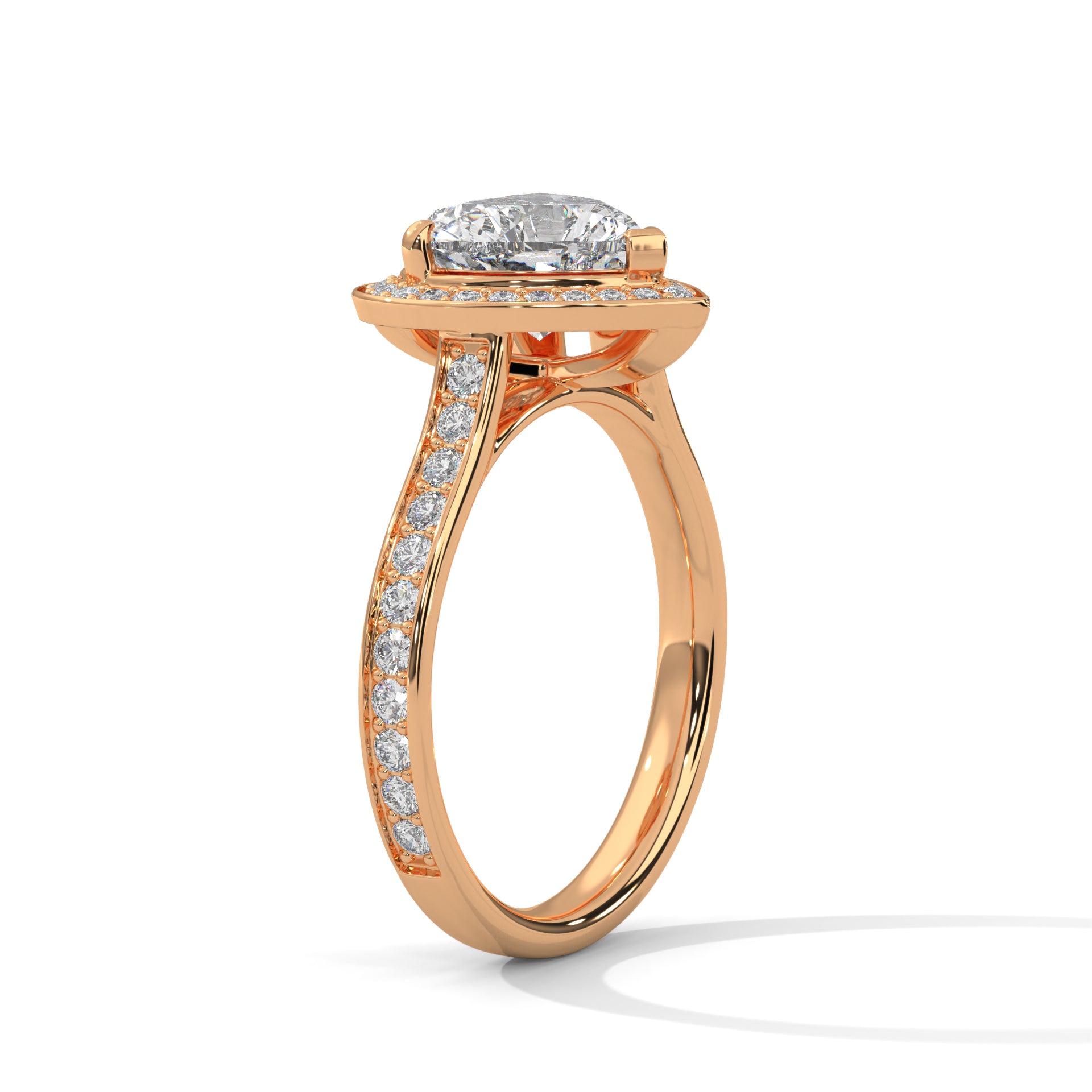
Hidden halo and halo ring are the same kind of settings; the difference is halo ring doesn’t have an accent stone underneath the center stone. But the halo ring design is made with pavé diamonds around the center stone that makes a visible ring. This can make a 2 carat diamond look like it's pushing 2.5-2.7 carats, which matters if you're budget-conscious and want maximum visual size.
-
Three-stone
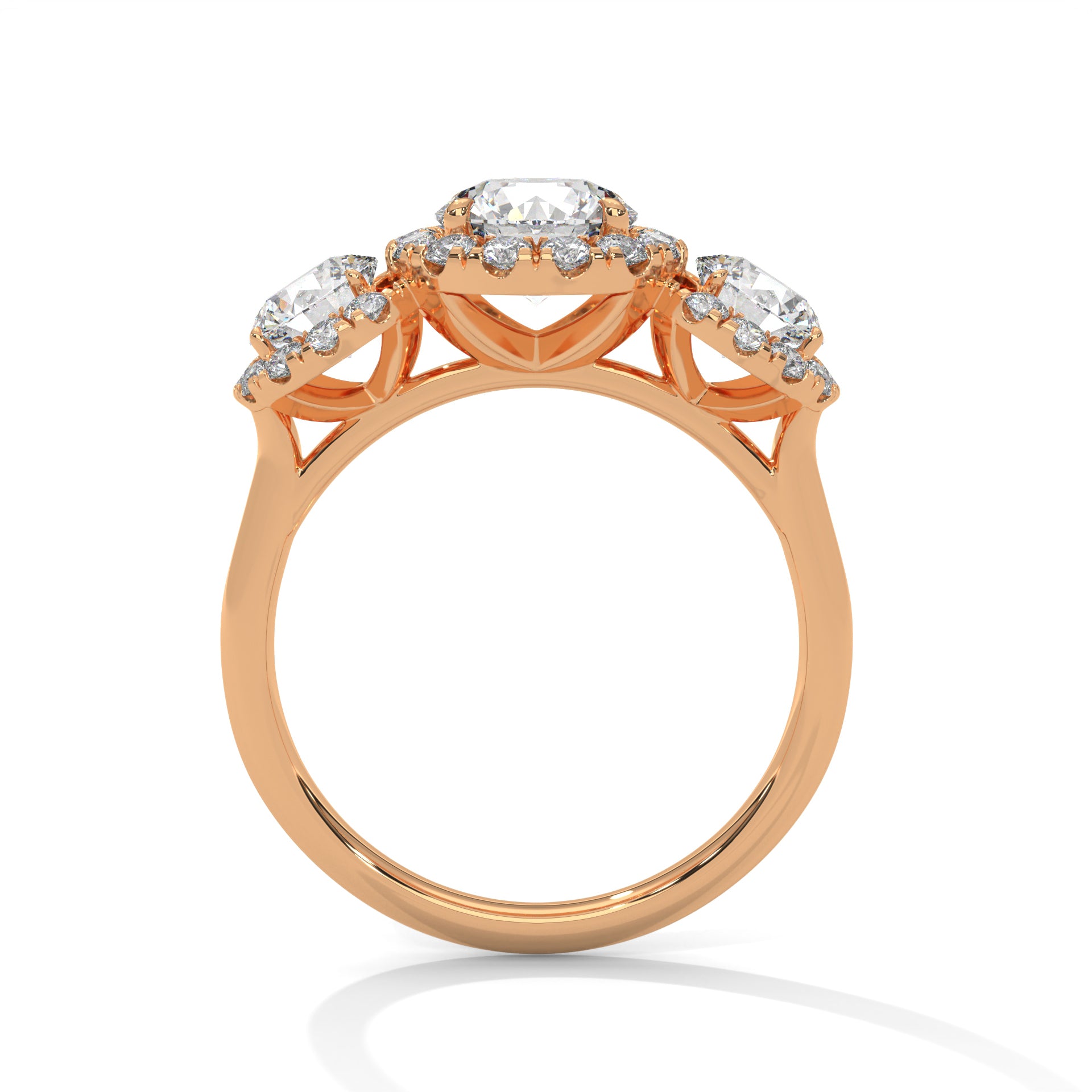
In a 2-carat three-stone ring design, the side stones are flanking the center diamond. This setting tends to elongate the finger and works especially well with oval or emerald-cut 2 carat centers. When it comes to choosing the setting, four or six prongs can be added, or a halo design is also available as per the personalized ring. You may have to stretch the budget around 10-15%.
-
Bezel
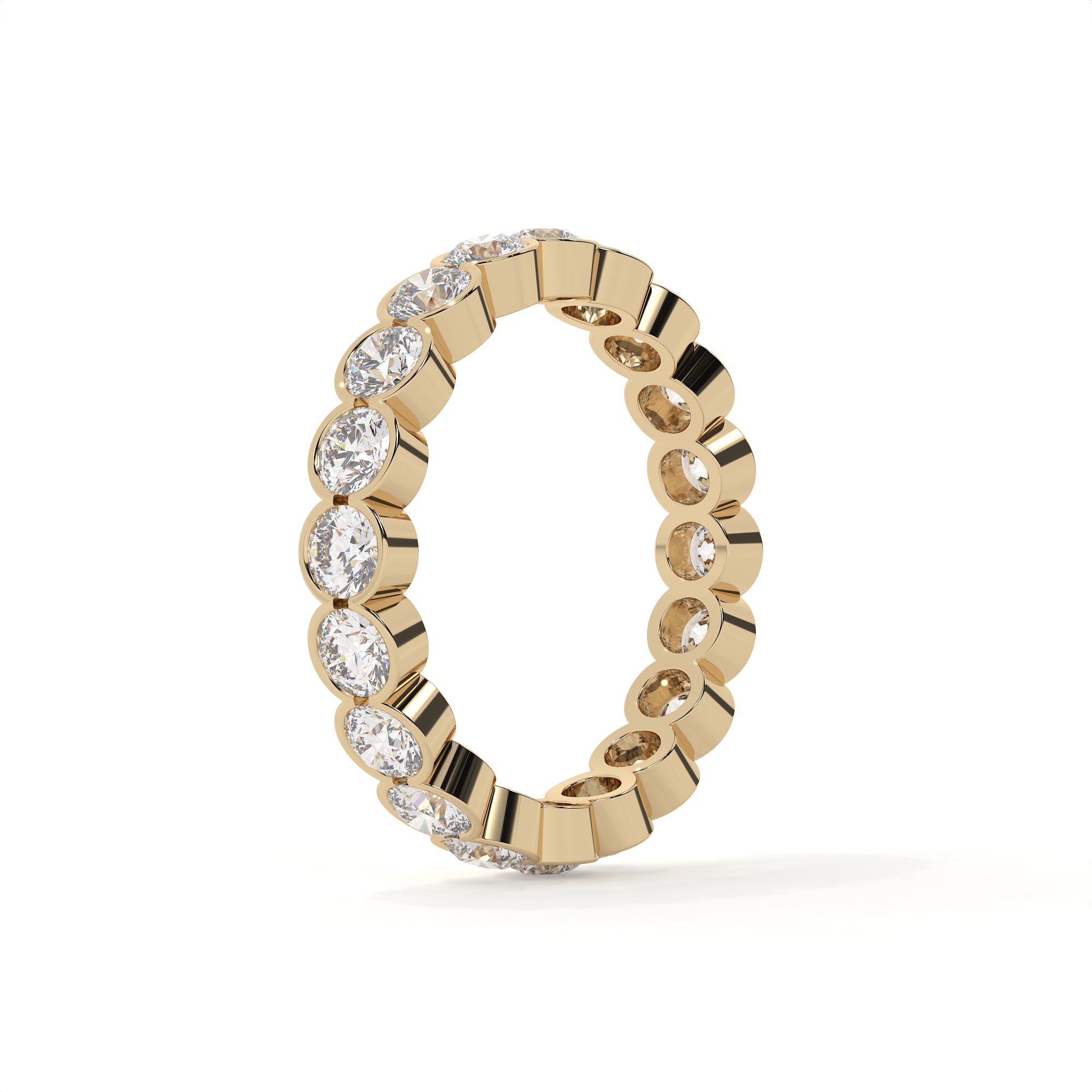
A metal rim fully or partially wrapping the stone in the bezel ring. It is the best for anyone with an active lifestyle, since it protects the girdle edge from chips, though it does slightly reduce how much light enters the stone from the side. In a 2-carat bezel set diamond ring, the round or oval shape usually looks enough to get the sparkle. For a unique ring appearance, you can ask a jeweler to add a one-side bezel and keep one side open.
Because a 2 carat center stone puts real weight and pressure on the prongs over years of daily wear, the setting's build quality matters as much as its style, including that thin, under-engineered prongs are the number one reason large center stones come loose. If you're shopping settings built specifically to carry a 2 carat stone long-term, that's worth checking before you fall for a design on looks alone.
Metal Tones for a 2 Carat Diamond: What Actually Suits This Size
Metal choice isn't just aesthetic preference at this carat weight. It changes how the diamond reads to the eye.

-
Platinum
When you buy a 2-carat ring, the setting matters, but the safest metal choice also matters, and platinum is the most secure among white or yellow gold. Platinum is the durable option for prongs to hold significant weight and doesn’t need replating. It can be read pure white, which makes higher color-grade diamonds (D-F) look their whitest.
-
White gold
For getting the same look as a platinum ring, a white gold 2-carat diamond ring offers that at a lower price point. White gold metal requires rhodium replating every 12-24 months; otherwise, it starts losing its color. A white gold ring is the smart choice if budget matters more than enough for long-term maintenance.
-
Yellow gold
A 2-carat ring in yellow gold metal is flattering on warm and olive skin tones, and genuinely useful if your diamond's color grade is I or lower. Its warm metal masks a faint yellow tint that would otherwise be obvious in white gold. At 2 carats, that tint is more visible than it would be on a smaller stone, so this pairing solves a real problem, not just a style one.
-
Rose gold
For a woman who loves a pinkish metal tone in the engagement ring or wedding band, rose gold is the choice. This metal is increasingly famous for 2-carat halos and vintage-inspired settings. A rose gold ring warms the overall look and photographs beautifully, though it can slightly emphasize warmth in lower-color diamonds the same way yellow gold does.
A rule of thumb specific to larger stones: the bigger the diamond, the more its color grade is visible to the naked eye, so metal tone becomes a genuine color-correction tool at 2 carats in a way it isn't at 0.5 carats. If you're set on the bright, colorless look, browse round and oval lab-grown diamond eternity bands in platinum or white gold to pair alongside a 2 carat center, which is matching metals across the stack matters more visually than most buyers expect.
Where to Buy a 2 Carat Diamond Ring?
Buy from a retailer that gives you three things, in this order:
-
Independent certification (GIA or IGI, not an in-house lab)
-
A real return window (30 days minimum, not "final sale on custom orders")
-
Clear sourcing on whether the stone is natural or lab-grown. Some sellers bury this in fine print because lab-grown carries a lower price expectation.
Alyce Jewels engagement rings offer everything mentioned herein. So, whenever you’re looking for an engagement ring or a wedding ring in a 2-carat lab-grown diamond, we are here to showcase the exact design you want. For a customized ring, we have that option open for you.
Avoid buying a 2 carat stone sight-unseen from a marketplace listing with no certification number you can independently verify on GIA's or IGI's own site. At this price point, a five-minute verification check is nonnegotiable.
What Buying a 2 Carat Ring Is Actually Like (The Part Nobody Talks About)
Most guides stop at price and specs. Here's what actually trips people up once they're mid-purchase:
-
The photo-vs-hand gap is real.
A 2 carat diamond photographed against a white background looks enormous. On an actual hand, especially a smaller one, it reads more modestly than the photo suggested. If you're buying online, ask for a video of the ring on a model's hand, not just studio product shots. It’s the single best way to calibrate expectations before you buy.
-
Sizing anxiety is the #1 reason people stall on the purchase.
It is applicable, especially for surprise proposals. A retailer that offers one free resize and a sizing kit mailed to your door removes the actual blocker, not just the emotional one. Prefer this option for avoiding paying extra in the redesign because a wrong ring size measurement has been done.
-
Insurance gets forgotten until it's too late.
A 2 carat diamond ring is worth insuring the day it arrives, not the day something happens to it. Ask your retailer if they provide an appraisal document with purchase that you'll need for your policy, and not every seller includes one automatically.
-
Buyer's remorse over shape, not price, is the most common regret.
People second-guess round vs. oval far more often than they regret what they spent. Also, the radiant and emerald cut ring found a promising option. If a retailer lets you swap the center stone shape within a return window before the ring ships, use that window because it solves the regret that actually happens.
FAQs
-
Is a 2 carat diamond too big for everyday wear?
Not inherently. It depends more on setting height and prong style than carat weight. A low-profile solitaire or bezel setting wears comfortably day-to-day, compared to a tall halo, which looks to catch on gloves and sweaters.
-
How many millimeters is a 2 carat diamond?
A round 2 carat diamond typically measures about 8.1-8.2mm in diameter, though well-cut stones can measure slightly larger or smaller while weighing the same.
-
What's the difference between "2 carats" and "2 carat total weight (TW)"?
"2 carats" usually refers to a single center stone. "2 carat TW" (or CTW) means the combined weight of all diamonds in the piece, including side stones or a halo. So, a "2 carat TW" ring often has a noticeably smaller-looking center stone than a true 2 carat solitaire.
-
Can you finance a 2 carat diamond ring?
Most reputable jewelers offer installment or financing options, particularly for natural diamonds at higher price points. Ask about 0% APR windows specifically, since standard financing terms can add meaningfully to the total cost.
-
Does a 2 carat lab-grown diamond hold value like a natural one?
No. Lab-grown diamonds depreciate faster on resale because supply isn't limited the way natural diamond supply is. Most buyers choosing lab-grown are optimizing for size and brilliance per dollar, not resale value, which is a reasonable trade-off as long as you're not buying as an investment.
-
How long does it take to get a custom 2 carat diamond ring made?
Typically 2-4 weeks for a custom setting with a pre-selected stone, longer if you're sourcing a rare natural stone to exact specifications. Alyce Jewels offers the custom ring design service and ships the final, ready jewelry within the mentioned timeframe.