

Quick answer: Yes, when "cheap" means a lower price for a certified diamond, not lower quality. Lab-grown diamonds are real diamonds. Bad deals come from uncertified stones, poor cuts, and look-alikes sold as diamonds. By buying a lab-grown diamond ring for $1,000 to $2,000, you can comfortably get an independently graded, solid-gold ring in a size that once cost several times more.
What "Cheap" Actually Means in 2026
The word "cheap" causes most of the confusion. A ring can be cheap in two ways:
-
The price is low because the diamond costs less to produce
-
Because corners were cut.
Only the first is a good deal.
The gap between lab-grown and mined stones is large. A 1-carat lab-grown diamond averages under $1,000 at retail in 2026, compared with roughly $4,200 for a comparable natural stone. Prices have also fallen sharply over time. A 1-carat lab-grown stone that cost around $4,000 in 2020 now runs roughly $700 to $1,500.
Lab-grown diamond rings are now the mainstream choice, not a niche one. Around 61% of engagement ring center stones sold in 2026 are lab-grown, up from roughly 12% in 2019. So if you're considering one, you're in the majority.
Why Lab-Grown Rings Cost Less (It's Not the Diamond Quality)

The FTC and IGI both confirm that lab-grown diamonds have the same properties as mined diamonds in terms of hardness, fire, and sparkle. The difference is origin. One is grown in a controlled facility over weeks. The other forms underground over billions of years and must be mined, sorted, and shipped through a long supply chain.
Production capacity has also expanded a lot. China and India scaled up their growing facilities rapidly between 2020 and 2024, and retailer competition compressed margins. The good news for buyers is that the freefall is easing. Quarter-on-quarter price declines slowed to about 4.7% in early 2026, and analysts point to a production cost floor. Waiting another year to save a small amount usually isn't worth delaying a proposal.
Where Cheap Diamond Ring Goes Wrong: 5 Red Flags
Most bad experiences come from a short list of problems. Watch for these before you buy.
-
No independent certificate
Some sellers offer no grading at all, or only an "in-house" report. This is not good practice when buying a diamond ring. Insist on a report from a recognized lab such as IGI or GIA that lists the 4Cs of diamonds: carat, cut, color, and clarity. It should also confirm the stone is lab-grown.
-
A price that's too good to be true
When seeing a ring priced at $400 to $500 for a 1-carat diamond, stop because it may contain a diamond alternative like Cubic Zirconia (CZ) or Moissanite. Experts warn that simulants are sometimes sold as "lab-grown." A real diamond tests as a diamond, and a certificate proves it.
-
A poor cut
A diamond ring should sparkle when you wear it, and that comes from the cut grade (preferably Excellent to Good). Avoid any diamond with a Poor cut grade, even in a three-stone side-setting ring. Two diamonds with the same carat weight can look completely different if one is cut poorly. A cheap ring with a "Good" cut grade can look flat and glassy next to an "Excellent" one.
-
Thin or hollow metal
A great stone in weak plating or lightweight metal won't survive daily wear. Look for solid 14K or 18K gold and clear metal details. A 950 platinum ring with a lab-grown diamond also looks beautiful for a proposal, promise, or even an engagement.
-
Vague policies
A trustworthy seller states its return, resizing, and shipping terms up front. If you can't find them, that raises questions. Avoid buying a lab-grown diamond engagement ring from them, and look for a better option.
What $1,000 to $2,000 Actually Buys
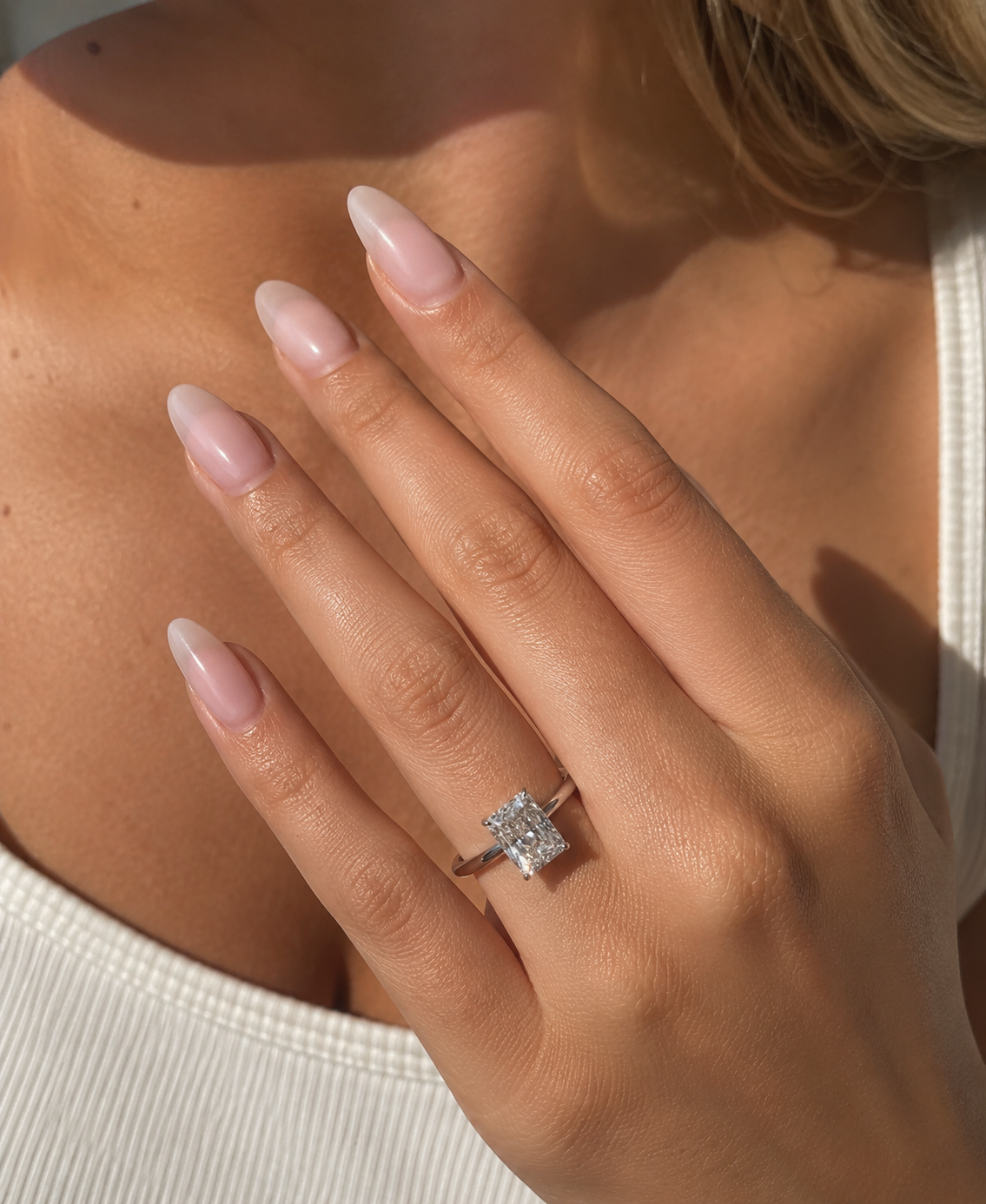
This range is the sweet spot for lab-grown. In 2026, $2,000 can buy a 1.5 to 2-carat lab-grown diamond with strong color and clarity in a 14K gold setting, a budget that bought about half a carat of natural diamond five years ago.
Here are examples from Alyce Jewels' lab-grown diamond engagement rings from the $1,000 to $2,500 collection (prices at the time of writing, so check the product page for current pricing):
-
Under $1,000: The 1.50 Carat Oval Solitaire at $875 gives you a big oval look. Browse more in lab-grown engagement rings under $1,000.
-
Around $1,000 to $1,200: The 1.92 Carat Round Solitaire at $1,100 is the classic proposal ring, and the 2 Carat Pear Side Stone Ring at $1,115 adds extra shimmer.
-
Around $1,300 to $1,550: The 2.62 Carat Emerald Hidden Halo at $1,345 and the 2.94 Carat Radiant Solitaire at $1,525 deliver near-3-carat presence.
Every center diamond comes with an independent grading report (IGI or GIA) confirming its carat, cut, color, and clarity.
Which of the 4Cs to Prioritize on a Budget
You don't need perfect everything. Spend where the eye can see it.
-
Cut first. Choose Excellent or Ideal. It's the one grade you should never compromise on.
-
Color second. D–F is colorless, while G–H is near-colorless and virtually indistinguishable once set. Going one grade down is an easy way to save.
-
Clarity third. VS1–VS2 is the sweet spot, since inclusions are invisible to the naked eye and cost less than higher grades.
-
Carat last. Bigger is appreciated, but a well-cut 1.5-carat stone beats a poorly cut 2-carat every time.
Shape and Setting: Getting More Look per Dollar

Shape changes how large a diamond appears. Oval and pear shapes look larger than their carat weight suggests and often cost less than rounds so a 1.5-carat oval can look like a 1.8-carat round. Emerald and radiant cuts also spread wide on the finger.
Ring setting style changes the personality and the price:
-
Solitaire: Solitaire engagement rings bring a timeless look and personality that lets the diamond do the talking. Browse solitaire lab-grown diamond engagement rings. You can wear the ring with a promise ring or stack it with other jewelry.
-
Halo: For a premium-looking ring, halo design is most popular, as the smaller diamonds make the center stone look bigger even in 1-carat to 2-carat. Explore halo diamond engagement rings.
-
Solitaire with accents: This engagement ring style features a clean center stone with small diamonds along the band. See solitaire accent lab-grown rings.
You can also browse the full certified lab-grown diamond engagement ring collection by shape and style.
A Ring for Every Occasion
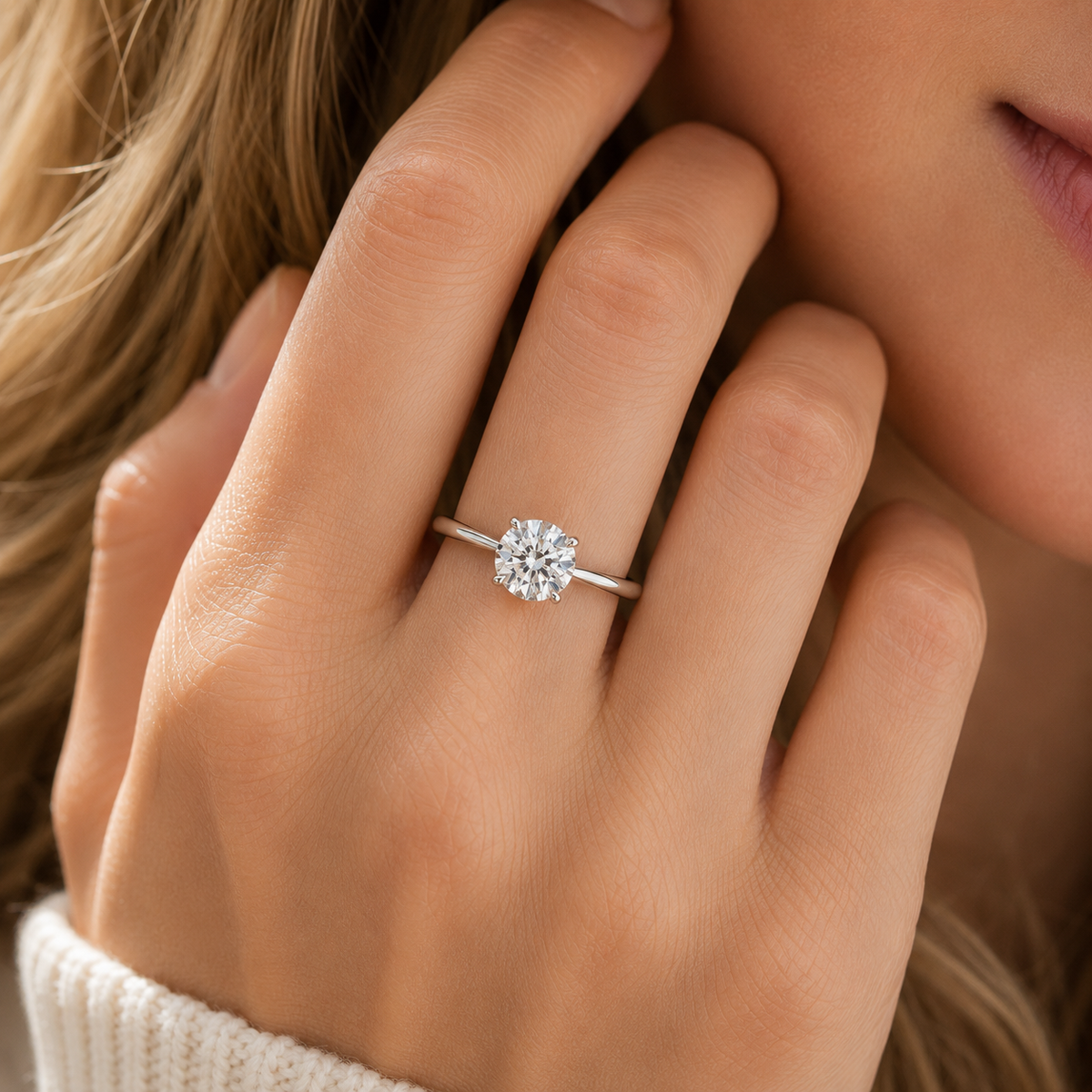
A $1,000 to $2,000 budget works well beyond the classic proposal.
-
Proposal or engagement: A solitaire or hidden-halo ring in oval, round, or emerald cut is the most popular choice.
-
Promise ring: A smaller stone in a simple setting sends a meaningful message without a big commitment.
-
Wedding: Pair your engagement ring with a matching lab-grown diamond eternity band. Bands with emerald-cut or round stones layer beautifully with most solitaires.
-
Anniversary: A stackable eternity band or an upgraded center stone marks the milestone. Many couples use an anniversary to "re-propose" with a bigger ring.
-
Birthday, Valentine's Day, or the holidays: Rings you can order ahead sell out around Birthday, Valentine's Day, Christmas, and Mother's Day, so buy early to allow for shipping and any sizing needs.
The Honest Tradeoffs
A straight answer includes the downsides. First, resale. Natural diamonds retain roughly 20–60% of their value over decades, while lab-grown stones retain about 10–40%, and that may narrow further as production costs fall. Buy a lab-grown ring to wear, not to invest in.
Second, the certificate landscape has shifted. In October 2025, GIA replaced its full lab-grown grading scale with two descriptive tiers, making IGI the main source of familiar grades for most lab-grown diamonds. Don't be surprised if your report is from IGI. It's a widely accepted standard.
Your Pre-Purchase Checklist
Before you check out, confirm:
-
The diamond has an IGI or GIA report matching the listing
-
The cut grade is Excellent or Ideal
-
The metal is solid gold, with the karat stated
-
Return, resizing, and shipping terms are clear
-
You know the recipient's ring size (a ring size guide helps)
-
Insurance is arranged, since a certificate helps with valuation
The Bottom Line
Cheap lab-grown diamond rings are good when the low price comes from the technology, not from missing certification or a poor cut. Look for a certificate, an Excellent cut, and solid gold, and your budget goes a long way.
Ready to find yours? Start with the lab-grown diamond engagement rings from $1,000 to $2,500, or browse the full engagement ring collection to filter by shape and style. When you're ready for the wedding day, add a matching eternity band.
FAQs
-
Are cheap lab-grown diamond rings real diamonds?
Yes. Lab-grown diamonds have the same chemical composition, hardness, and sparkle as mined diamonds. Only a certified grading report can confirm a specific stone's quality and origin.
-
How much should I spend on a lab-grown engagement ring?
Most buyers find $1,000 to $2,000 a strong range. It typically covers a certified stone of roughly 1.5 to 2+ carats in a 14K gold setting, depending on shape, color, and clarity.
-
Do lab-grown diamonds scratch or cloud over time?
No. They rate 10 on the Mohs hardness scale, the same as mined diamonds, so they resist everyday scratches. Regular cleaning keeps them bright.
-
Is a certificate really necessary?
Yes. An independent report from IGI or GIA proves the carat, cut, color, and clarity. Without one, you're relying on the seller's word.
-
Are lab-grown diamond rings a good gift for an anniversary or birthday?
They're a popular choice, since the budget stretches to a larger or more detailed ring than a mined diamond would allow.